

Functional Rhinoplasty vs. Cosmetic Rhinoplasty: What Is the Difference?
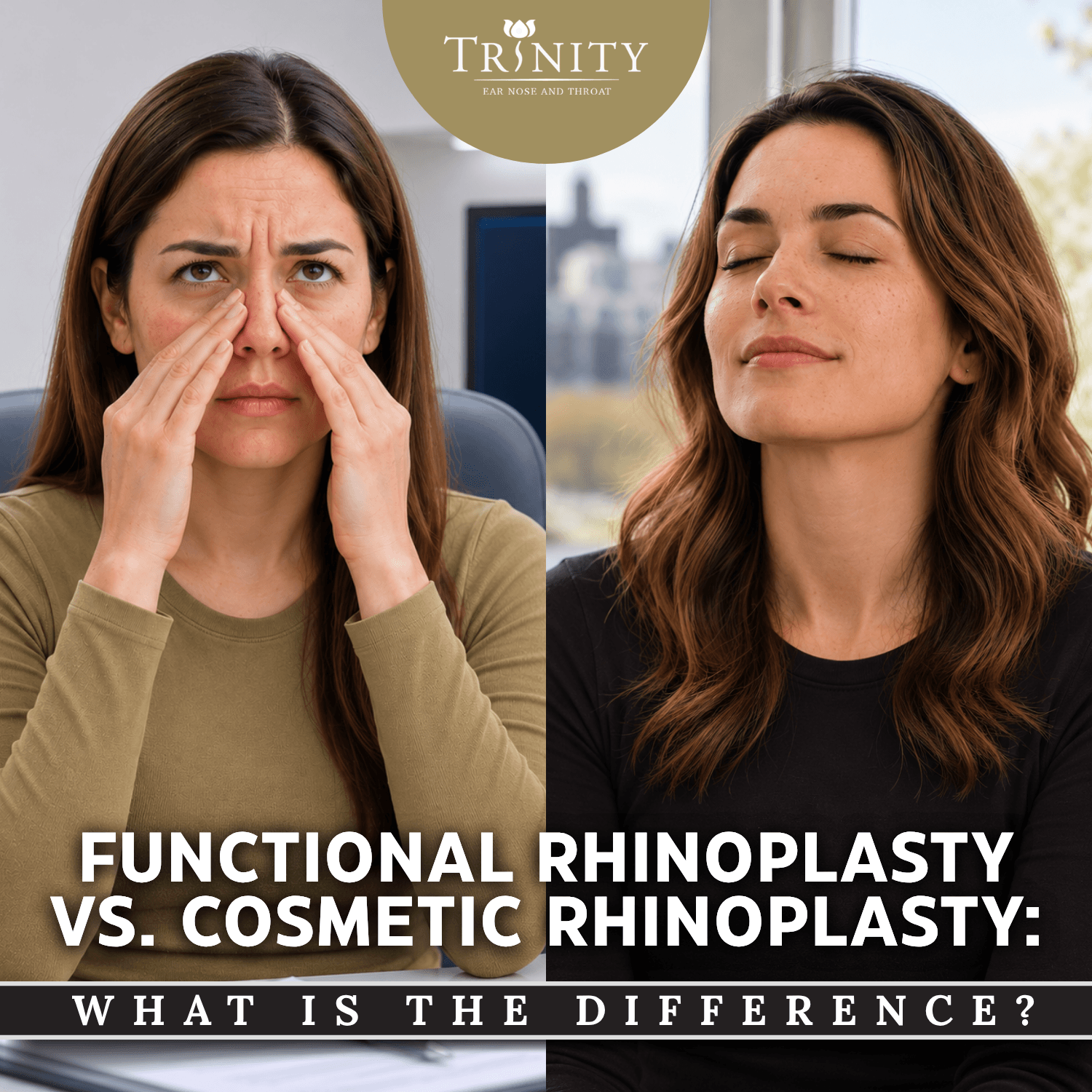
An educational graphic from Trinity Ear Nose and Throat showing a split image of a woman experiencing nasal discomfort on the left and breathing comfortably on the right. Bold white text overlay asks, "Functional Rhinoplasty vs. Cosmetic Rhinoplasty: What Is the Difference?"
Functional Rhinoplasty vs. Cosmetic Rhinoplasty: What Is the Difference?
People consider rhinoplasty for different reasons. Some people pursue the procedure to change the appearance of their nose, while others need surgery to address structural problems that may be affecting nasal airflow and breathing.
These two approaches are known as functional rhinoplasty and cosmetic rhinoplasty. They have different primary goals, although they may involve overlapping surgical techniques. Sometimes, these approaches can be combined in one surgery depending on the patient's needs and goals.
Here at Trinity ENT, we help patients in Gilbert, AZ, understand the difference between functional and cosmetic rhinoplasty and determine which approach may be appropriate for their nasal concerns and treatment goals.
What Is the Difference Between Functional Rhinoplasty and Cosmetic Rhinoplasty?
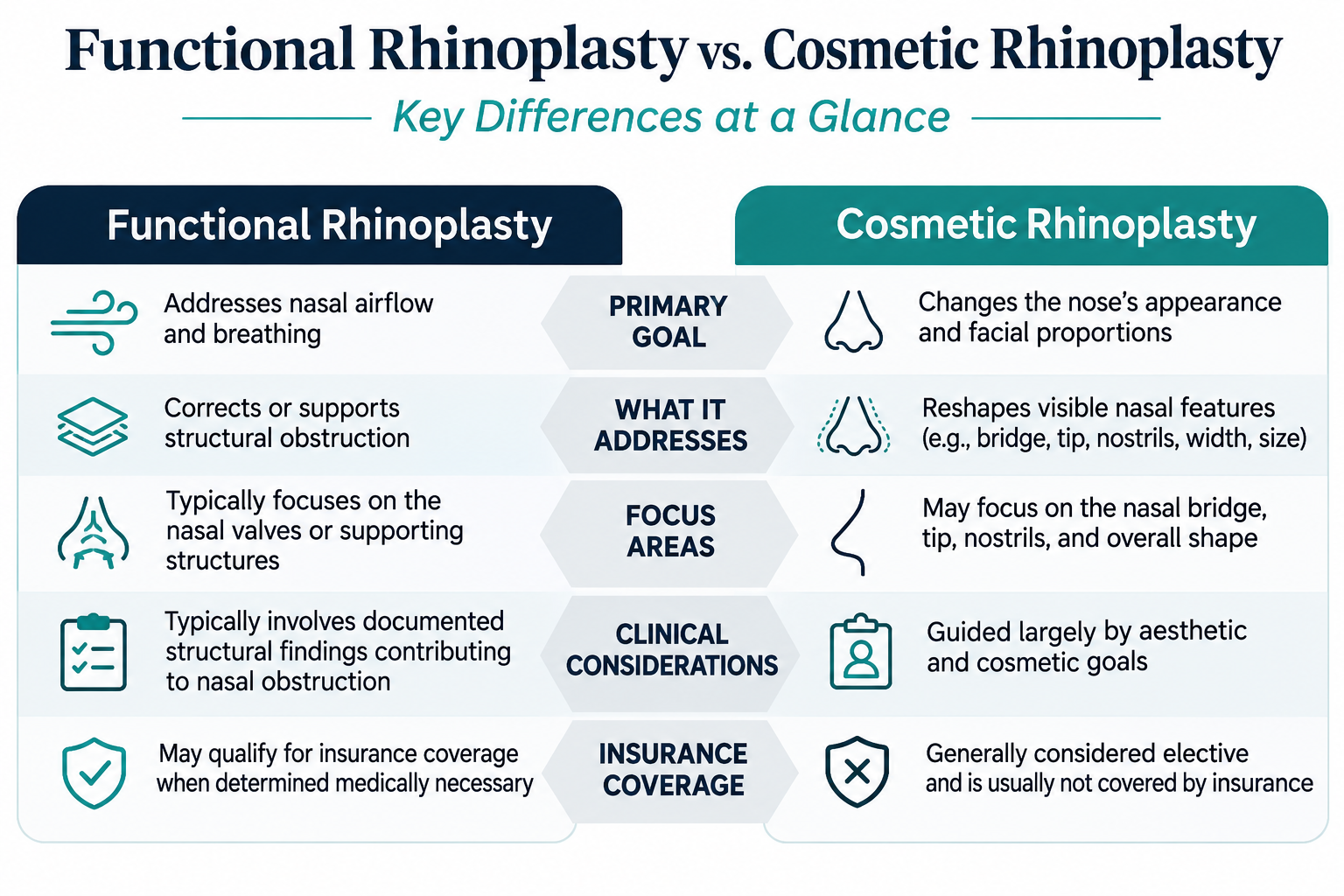
Functional rhinoplasty is a surgical procedure designed to improve nasal airflow by correcting structural issues that may be interfering with breathing. Cosmetic rhinoplasty, on the other hand, is primarily designed to change the appearance and proportions of the nose, as well as its relationship to other facial structures.
Some patients may have both functional and cosmetic concerns. In such cases, a combined functional and cosmetic approach may be considered to address both nasal breathing and the appearance of the nose during the same operation, depending on the patient's needs and clinical findings.
What Is Functional Rhinoplasty?
Functional rhinoplasty is a surgical approach intended to improve nasal breathing by addressing structural problems that contribute to airway obstruction. It may be used to reshape or reinforce cartilage and the surrounding supporting structures to improve the stability and function of the nasal airway. The procedure focuses on the structural regions of the nose that help keep the nasal airway open.
One common concern that may be addressed by functional rhinoplasty is nasal valve collapse or narrowing. The nasal valve region is among the narrowest portions of the nasal airway and plays an important role in regulating airflow. Weakness, narrowing, or damage to this structure may cause the sidewall of the nose to pull or collapse inward during inhalation, which can restrict airflow.
What Can Functional Rhinoplasty Address?
Functional rhinoplasty may be considered for:
- Nasal valve collapse
- Internal or external nasal valve narrowing
- Congenital nasal issues
- Structural changes due to previous trauma or injury to the nose
- A crooked or twisted nasal framework that may obstruct airflow
- Breathing issues resulting from previous nasal surgery
- Weakness or loss of cartilage that supports the nasal airway
It's worth noting that not every breathing issue will require functional rhinoplasty. Other causes, such as allergies, chronic sinus inflammation, nasal polyps, enlarged turbinates, and other sinus conditions, may need a different treatment approach.
Is Functional Rhinoplasty the Same as Septoplasty?
No, functional rhinoplasty and septoplasty are two different procedures.
Septoplasty is a surgical procedure designed to correct, straighten, or reposition a deviated septum. A deviated septum occurs when the wall of bone and cartilage separating the nasal passages is off-center or misaligned.
Functional rhinoplasty typically addresses the outer nasal structure, nasal valves, and other supporting structures beyond the nasal septum.
Some patients may have structural issues involving both the nasal septum and the nasal valves. In these cases, surgeons may perform septoplasty and functional rhinoplasty during the same operation.
What Is the Primary Goal of Functional Rhinoplasty?
The primary goal of functional rhinoplasty is to improve nasal airflow and overall function. Objectives may include:
- Correcting structural narrowing caused by injury or natural development
- Improving the stability of the nasal airway
- Supporting weak or collapsing nasal sidewalls
- Creating more space for air to pass through the nasal airway
- Improving nasal airflow that may be restricted during physical activity or sleep
While appearance changes are not the primary goal of functional rhinoplasty, structural changes inside the nose can alter how it looks on the outside. During your consultation, your surgeon will explain the procedure, as well as any appearance changes that may occur.
What Is Cosmetic Rhinoplasty?
Cosmetic rhinoplasty is primarily performed to change the appearance, shape, size, or proportions of the nose.
During a consultation, the surgeon will consider the patient's individual preferences, as well as how the nose relates to surrounding facial features, such as the chin, lips, and eyes.
What Concerns Can Cosmetic Rhinoplasty Address?
Cosmetic rhinoplasty may be considered to:
- Straighten a visibly crooked nose
- Reduce or reshape a bump on the nasal bridge
- Refine a wide, drooping, or bulbous nasal tip
- Change the rotation of the nasal tip
- Improve visible nasal symmetry
- Adjust the overall size of the nose
- Narrow the nasal bones or nostrils
- Create a different balance among surrounding facial features
The patient's cosmetic goals should be discussed carefully during consultation.
What Is the Primary Goal of Cosmetic Rhinoplasty?
The primary goal of cosmetic rhinoplasty is to change the appearance of the nose while maintaining and protecting nasal function.
It's worth noting that even if nasal breathing is not the reason for surgery, a surgeon must consider how cosmetic changes may affect the nasal airway. Removing excessive structural support may contribute to nasal breathing difficulties.
As such, planning for a cosmetic procedure should consider both appearance and long-term nasal function and structural stability.
Functional Rhinoplasty vs. Cosmetic Rhinoplasty: What Are the Main Differences?
Can Rhinoplasty Be Both Functional and Cosmetic?
Yes, rhinoplasty can address both functional and cosmetic concerns, and the two approaches are not mutually exclusive.
The nose is both a respiratory structure and a central facial feature. Correcting a structural problem may change the nose's appearance, even if it's not the primary goal. Likewise, changes in the appearance of the nose can also affect airflow. Some patients may choose a combined procedure to address both functional and cosmetic concerns when appropriate.
Does Having a Breathing Problem Mean I Need Surgery?
No, having a breathing problem doesn't necessarily mean you need surgery. Nasal obstruction can have several causes, including allergies, chronic sinusitis, nasal polyps, sinus infections, and temporary inflammation. Many of these conditions can initially be managed without surgery, depending on the diagnosis and severity of symptoms.
Initial treatment may include allergy management, saline rinses, nasal sprays, and other medical management strategies.
Surgery may be considered when a structural problem is causing significant obstruction and symptoms do not improve or respond adequately to appropriate nonsurgical treatment.
While medical management may reduce inflammation and improve symptoms, it generally cannot correct a fixed structural abnormality contributing to nasal obstruction. Whether surgery is necessary will depend on the underlying cause and individual clinical findings.
Conclusion: Choosing a Rhinoplasty Procedure Based on Your Needs and Treatment Goals
Trinity ENT offers ear, nose, and throat care services for patients in Gilbert, Mesa, Chandler, Tempe, Glendale, and nearby Maricopa County communities.
Schedule a consultation with our team to learn more about functional and cosmetic rhinoplasty and whether either approach, or a combination of both, may be appropriate for your needs.
More Insights to Explore

The information provided in this article is for informational and educational purposes only and does not constitute medical advice. It is not intended to diagnose, treat, cure, or prevent any disease or medical condition. Always seek the guidance of your physician or other qualified healthcare provider with any questions you may have regarding a medical condition or treatment.
Results may vary: Treatment outcomes and health experiences may differ based on individual medical history, condition severity, and response to care.
Emergency Notice: If you are experiencing a medical emergency, call 911 or seek immediate medical attention.
