

What to Expect During a Balloon Sinuplasty Procedure
For patients in Gilbert, Mesa, and Tempe dealing with chronic sinus pressure, congestion, and recurring infections, balloon sinuplasty is a minimally invasive treatment option that may be appropriate for certain patients. This in-office procedure uses a small balloon to gently open blocked sinus passages without cutting or removing tissue. At Trinity ENT, your provider can discuss potential benefits, risks, alternatives, and what recovery may involve as part of your individual plan for ongoing sinus care.
What to Expect During a Balloon Sinuplasty Procedure
If you live in Gilbert, Mesa, or Tempe and deal with constant sinus pressure, congestion, or repeated infections, you know how draining it can be. Many people in Arizona struggle with chronic sinus problems thanks to dry desert air, dust, and seasonal allergies. When medications and home remedies don’t do the trick, it may be time to explore other options.
That’s where balloon sinuplasty comes in. At Trinity ENT, we help patients explore care options for chronic sinus symptoms, including balloon sinuplasty — a minimally invasive treatment option that may be appropriate for certain patients. Let’s walk through what balloon sinuplasty is, what happens during the procedure, and why many patients ask about it as a sinus treatment option in Gilbert, Mesa, and Tempe.
What is Balloon Sinuplasty?
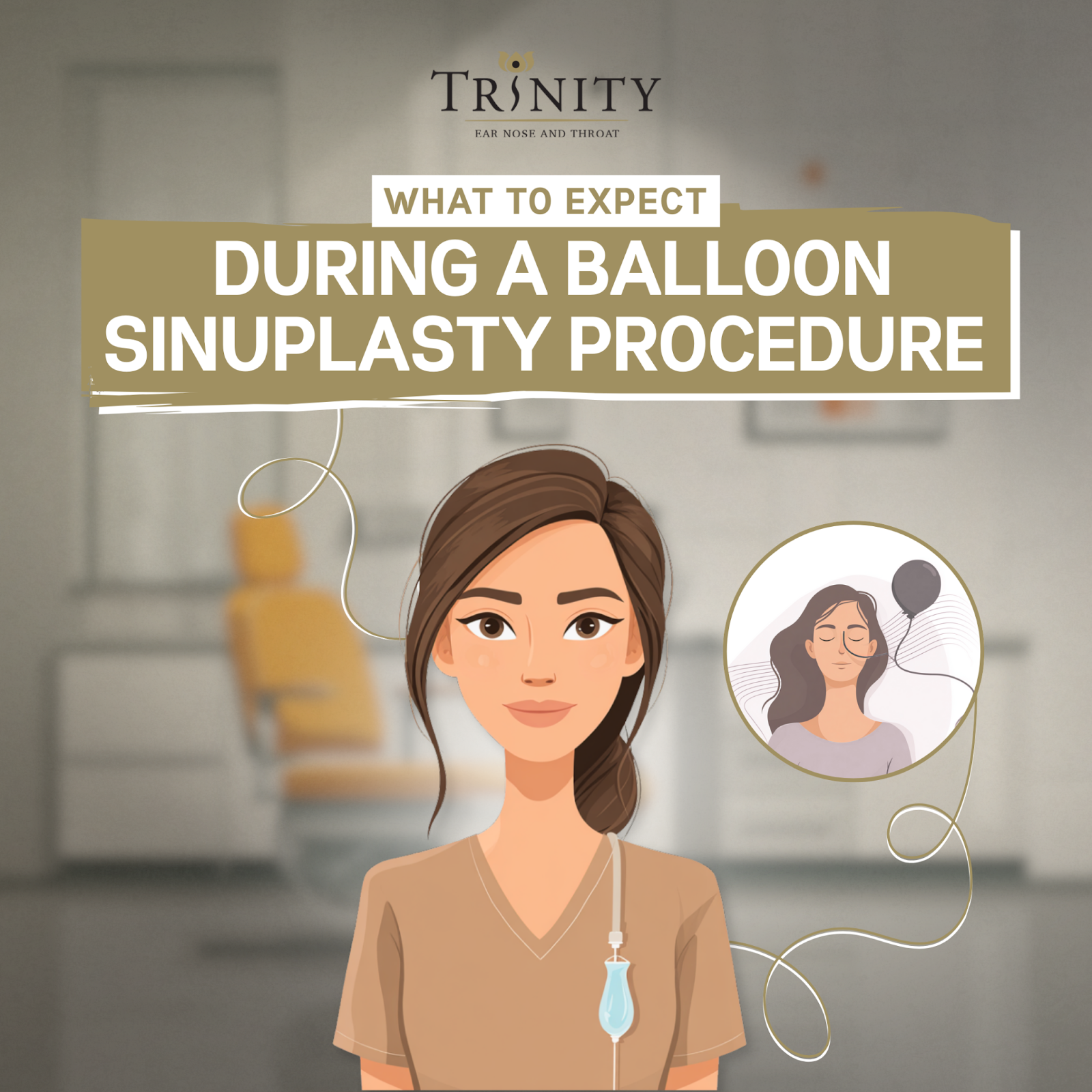
Balloon sinuplasty is a modern sinus treatment that gently opens blocked sinus passages. Instead of cutting or removing tissue, your ENT doctor uses a small balloon to widen the natural openings of your sinuses.
Once the balloon is inflated, the passage is typically widened to allow better drainage. This may help reduce congestion, facial pressure, and the frequency of infections. Think of it as opening up a clogged pathway so your sinuses can function the way they’re supposed to.
Why Arizona Patients Ask About It
Living in the East Valley brings its own set of sinus challenges. Dry air, dust storms, and seasonal pollen often make chronic sinusitis worse. Patients in Tempe, Gilbert, and Mesa AZ often tell us they’ve tried medications, rinses, and antibiotics and still have ongoing symptoms.
Balloon sinuplasty offers another option — one that’s minimally invasive, performed right in the office, and that may support ongoing symptom management for appropriate patients. Results vary depending on each patient’s diagnosis, evaluation, and treatment plan.
What to Expect During the Procedure
If you’re considering balloon sinuplasty, here’s a simple breakdown of what typically happens:
Step 1: Consultation
You’ll first meet with your ENT specialist, who will review your symptoms, check your sinuses, and may recommend imaging. This helps determine whether balloon sinuplasty is an appropriate option for you.
Step 2: Getting Comfortable
The procedure is usually done in the office under local anesthesia. That means the area is numbed, and you stay awake, but comfortable. There’s no need for a hospital stay.
Step 3: Balloon Placement
A thin, flexible instrument with a balloon at the tip is gently guided into your sinus opening.
Step 4: Inflation
Once in position, the balloon is slowly inflated. This expands the sinus passage, giving mucus a clear pathway to drain.
Step 5: Restore Drainage
The balloon is deflated and removed. The passage typically remains open, which may allow for better airflow and symptom relief.
Most procedures take under an hour. Recovery varies by procedure and individual health factors, and your care team will provide personalized aftercare guidance.
Potential Benefits of Balloon Sinuplasty
Your provider can discuss whether balloon sinuplasty may be appropriate for you. Potential benefits, which vary from patient to patient, may include:
- Minimally invasive – No cutting, no removal of bone or tissue
- Individualized recovery – During your evaluation, your provider can discuss potential benefits, risks, and what recovery may involve for your individual treatment plan.
- Ongoing symptom management – Management of recurring sinus concerns and management of sinus pressure and related symptoms
- Convenient – Done in the office instead of a hospital
- Potential improvement in breathing symptoms – Results depend on your diagnosis, evaluation, and treatment plan
Some patients report improvements in breathing and sleep quality, but results vary and depend on each patient’s diagnosis, evaluation, and treatment plan. As with any procedure, there are potential risks, and alternatives such as continued medical management or traditional sinus surgery may be more appropriate for some patients.
Is Balloon Sinuplasty Right for You?
Balloon sinuplasty is a treatment option that may be appropriate depending on the patient’s symptoms and evaluation, but it may not be suitable for every case. Some patients with severe sinus issues or structural problems may still need traditional surgery. That’s why it’s important to meet with an ENT specialist who can help you decide on the best treatment.
Explore Sinus Care Options in Gilbert, Mesa, and Tempe
If you’re dealing with ongoing congestion, headaches, or sinus infections, help is available. If you’ve been searching for balloon sinuplasty in Tempe, exploring sinus treatment in Gilbert, or considering sinuplasty in Mesa AZ, Trinity ENT is here to help.
Our team is dedicated to providing patient-focused care that fits your needs and lifestyle. If you’re ready to discuss options for chronic sinus problems, schedule a consultation with Trinity ENT today.
More Insights to Explore

The information provided in this article is for informational and educational purposes only and does not constitute medical advice. It is not intended to diagnose, treat, cure, or prevent any disease or medical condition. Always seek the guidance of your physician or other qualified healthcare provider with any questions you may have regarding a medical condition or treatment.
Results may vary: Treatment outcomes and health experiences may differ based on individual medical history, condition severity, and response to care.
Emergency Notice: If you are experiencing a medical emergency, call 911 or seek immediate medical attention.
